

Mining Project
Vision
The Oropesa Project is conceived as a reference tin mining operation in Europe, designed to respond responsibly and efficiently to the growing demand for critical raw materials, fundamental to industry, energy transition and European strategic autonomy.
Project development is based on deep knowledge of the deposit, the result of over a decade of continuous geological investigation work, drilling campaigns, geophysics and geotechnical and hydrogeological studies. This knowledge allows for rigorous engineering, reduces uncertainties and enables technical decisions oriented towards safety, operational efficiency and long-term stability of the operation.
Oropesa has been designed from its origin under criteria of modern and responsible mining. This translates into an approach that prioritizes minimization of territorial footprint, optimization of natural resource use —especially water, managed in zero discharge— exhaustive waste control and application of progressive restoration plans that accompany mining advance.
From a social and economic perspective, the Oropesa Project aspires to become an engine of local and regional development, generating skilled employment, fostering technical training and establishing stable and transparent relationships with the community, administrations and territorial agents.
Our vision is to develop mining that adds value beyond the resource, based on knowledge, engineering and people, with a clear commitment to permanence, transparency and continuous improvement, and that contributes tangibly to responsible tin supply in Europe.
A project committed to environmental protection
The project integrates the protection of the natural environment and compatibility with the territory’s environmental values as an essential part of its design, incorporating preventive, corrective and environmental monitoring measures in accordance with current regulations and best practices in the international mining sector.
Location
The Oropesa Project is located in the municipality of Fuente Obejuna, in the Guadiato Valley, north of the province of Córdoba, within the Alto Guadiato region, in the Sierra Morena area.
The Guadiato Valley is a territory with historical mining and industrial identity, where extractive activity has been part of economic and social development for generations. This trajectory has shaped knowledge of the territory and a consolidated relationship with mining activities, today approached from technical, environmental and social criteria inherent to modern mining.
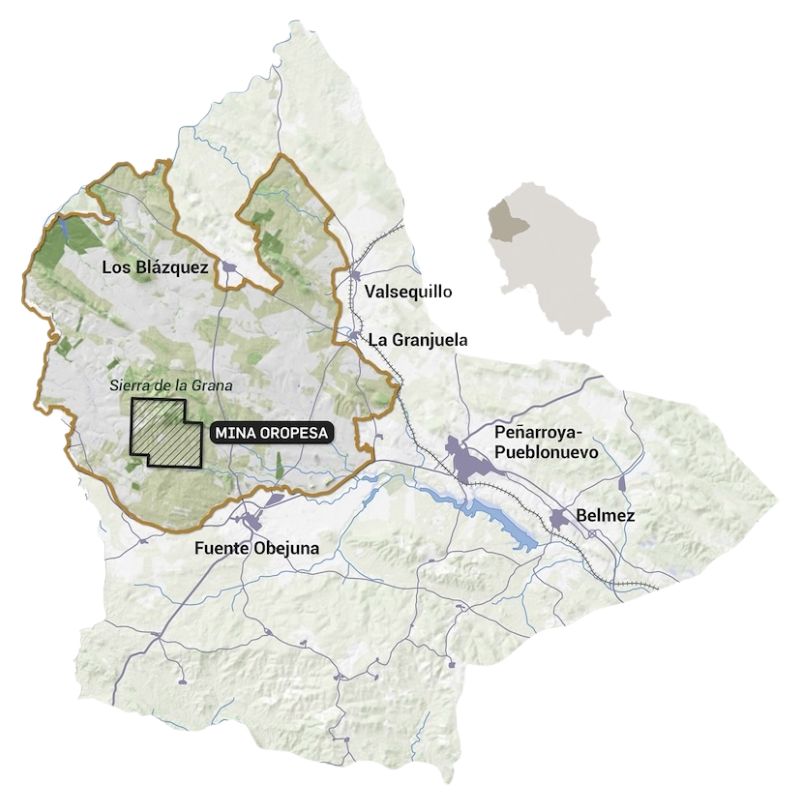
The project is situated in a low population density environment, without immediate urban centers, and with direct access from existing road networks, which allows for orderly and safe implementation of mining infrastructure, minimizing the need for new impacts.
From a landscape and territorial perspective, the project area is integrated into an environment characteristic of dehesa and extensive agro-system of the Guadiato Valley, crossed by the upper section of the Guadiato river. This reality has been considered from the initial design phases, incorporating measures for territorial integration, environmental protection and compatibility with traditional land uses.
Location in the Guadiato Valley allows the Oropesa Project to develop in a context where technical viability, respect for the environment and territorial roots converge, reinforcing the project’s commitment to sustainable development of the region and its surroundings.
Engineering and Geology
Engineering
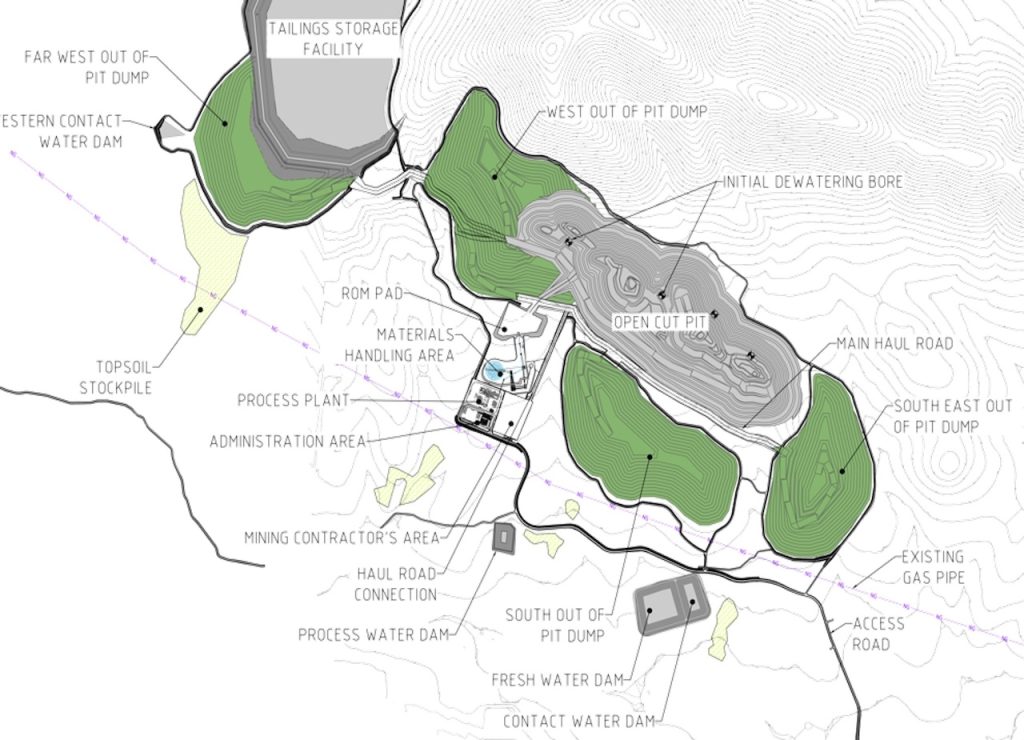
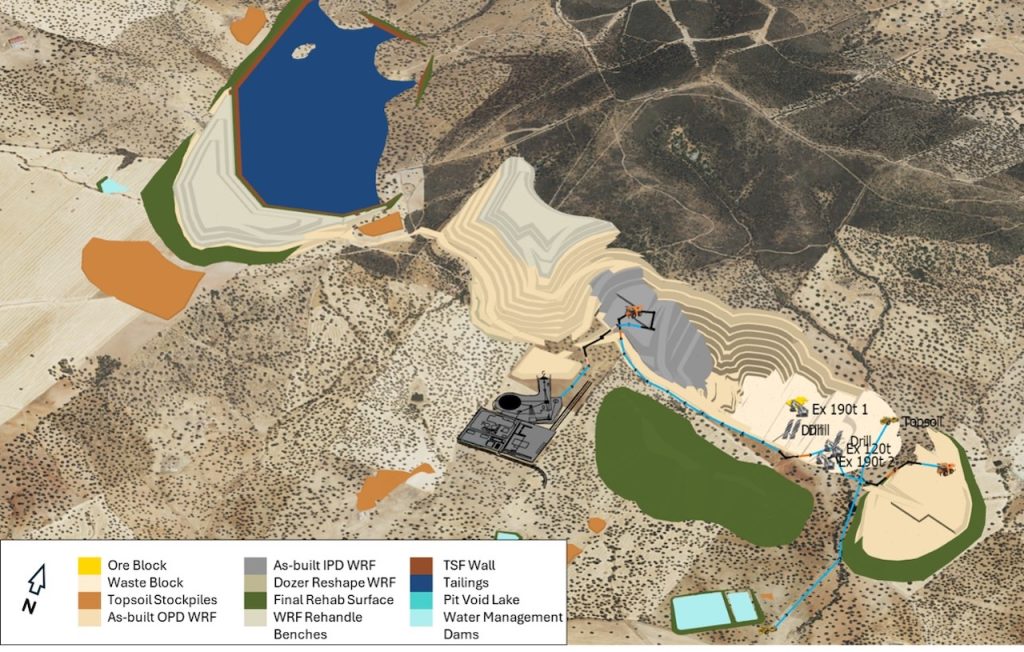
The engineering of the Oropesa Project has been developed on the basis of acquired geological knowledge, applying criteria of rigorous planning, operational safety and long-term efficiency. The operation design considers slope stability, geotechnical quality of the rock mass and optimization of the mining sequence throughout the project’s life of mine.
Mining planning integrates optimized waste management, combining surface waste dumps with transfer mining techniques that allow reuse of part of the excavated material in backfilling of already exploited areas. This approach reduces surface occupation, limits material movements and facilitates progressive area restoration.
Water management constitutes a central element of the project’s engineering. Based on specific hydrological and hydrogeological studies, a closed-circuit system has been designed, which prioritizes mining drainage, storage and reuse of water in the production process, guaranteeing zero discharge of industrial waters and significant reduction of external water resource consumption.
The project incorporates a mineral treatment plant designed according to the deposit’s mineralogy, combining pre-concentration processes using sensors, gravimetric concentration and flotation. The facilities have been conceived with proven technologies, advanced control systems and criteria of energy efficiency, industrial safety and environmental control.
Overall, the engineering of the Oropesa Project responds to an approach of modern and responsible mining, oriented towards guaranteeing safe, technically sound operation compatible with the environment, from the initial phases of exploitation through closure and final restoration.
Geology
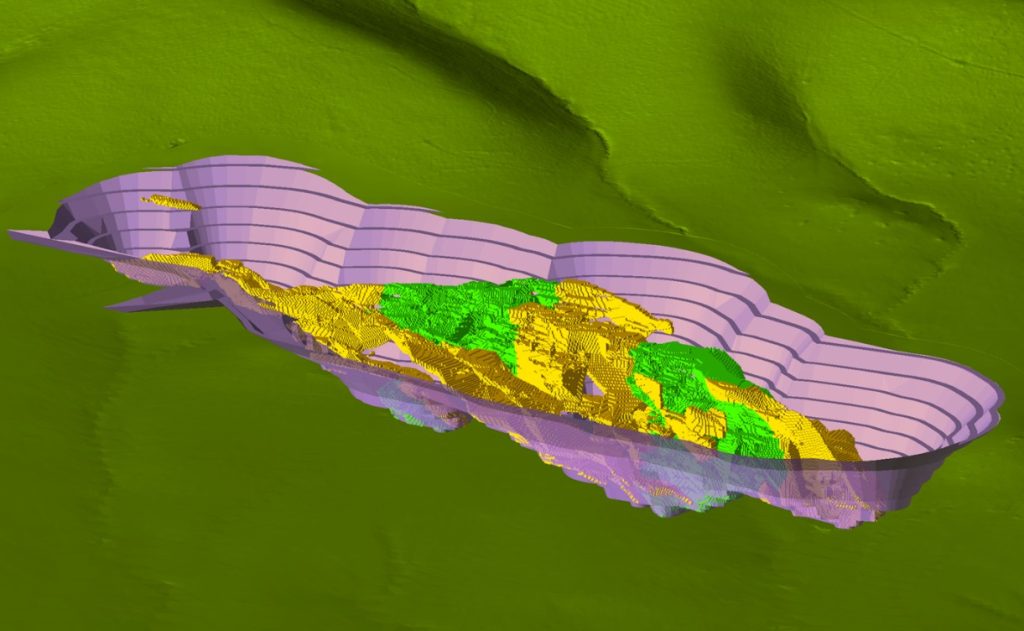
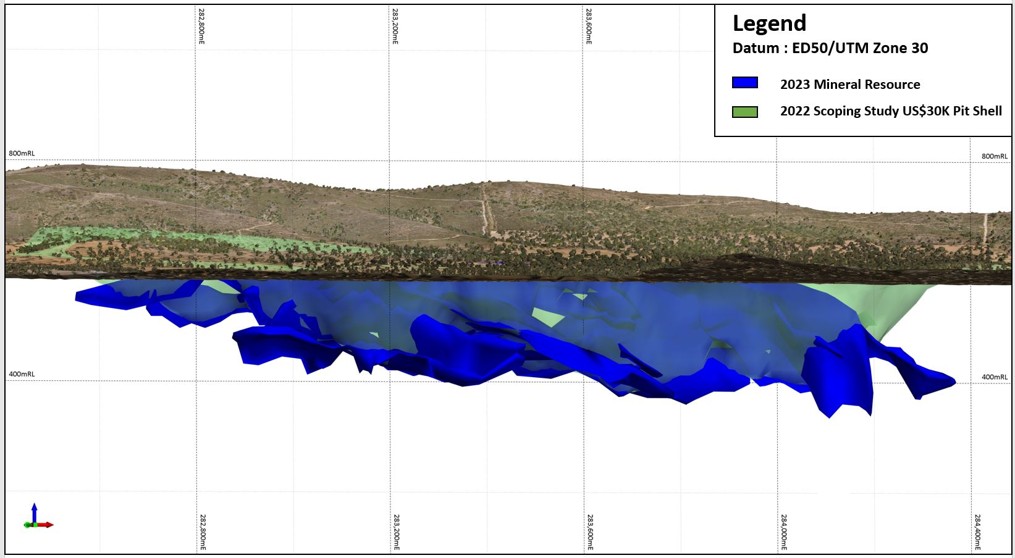
The Oropesa Project is based on detailed and proven geological knowledge, the result of over a decade of continuous research and characterization work of the deposit. This process has included detailed geological mapping, geophysics campaigns using induced polarization and resistivity, and more than 70,000 meters of mechanical drilling, which have made it possible to precisely define the geometry, continuity and quality of tin mineralization.
The deposit is located in the Guadiato Basin area, where tin mineralization is associated with Carboniferous clastic materials, mainly conglomerates, graywackes and shales. The genesis of the deposit is linked to the development of brittle and ductile tectonic structures that acted as preferential pathways for circulation of mineralizing fluids rich in metals.
Structural analysis has made it possible to identify the influence of fracture systems of different orientations, which have conditioned both the distribution of mineralized bodies and their continuity at depth. This geological framework has been incorporated into the three-dimensional geological model of the deposit, the basis for resource estimation and mining planning.
Associated geotechnical and hydrogeological studies have made it possible to characterize the mechanical behavior of materials and underground water circulation conditions, providing the information necessary for safe operation design and adequate management of geological and hydrogeological risks.
The project in numbers
The Oropesa Project has over a decade of investigation and development works, with an investment exceeding 30 million euros. This trajectory has made it possible to define a deposit with reserves of 15.9 million tonnes and 19.6 million resources and production capacity that could exceed 10% of current tin consumption in Europe and 1% globally.