

Tin
An essential metal for modern society
Tin is a critical metal for the functioning of modern society. Although it usually goes unnoticed, it is present in almost all electronic and electrical systems we use daily. Its main function is to enable reliable and lasting connections between components, acting as the “electrical glue” of the digital economy.
More than 50% of refined tin worldwide is destined for electronic soldering, especially lead-free soldering, which contains a high percentage of tin and is essential for electronic devices, communication networks, automotive, renewable energies and industrial equipment.
Unlike other industrial metals, tin does not have viable substitutes at large scale in many of its key applications, which reinforces its strategic character and its inclusion as a critical raw material by the European Union.
What is tin used for?
Tin is fundamental for:
In addition, it is used in:
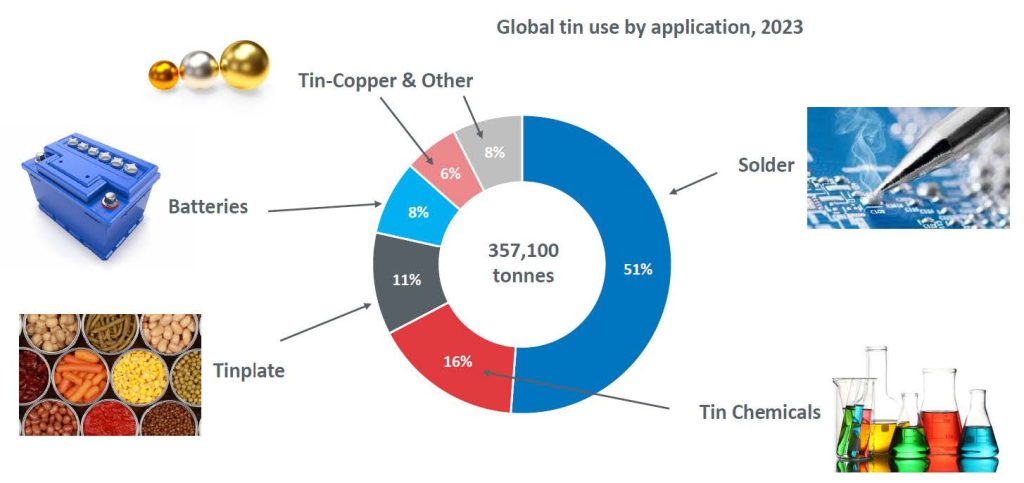
Energy transition, electrification and digitalization are driving sustained and structural demand for tin, even in scenarios of moderate economic growth.
Tin and Europe: a strategic dependency
Tin and Europe: a strategic dependency
Europe currently has no primary tin production and depends almost entirely on imports from third countries. This dependency directly affects the supply security of strategic sectors such as electronics, automotive, renewable energies and the technology industry.
At the same time, the global tin market faces a structural supply limitation, caused by:
This context has led the European Union to prioritize the development of its own sources of supply, secure, traceable and aligned with high environmental and social standards.

The role of the Oropesa Project in Europe
In this scenario, the Oropesa Project represents a unique opportunity for Europe. It is the only integrated “mine to metal” tin project in development within the European Union, with capacity to produce concentrate and transform it into metal within European territory itself.
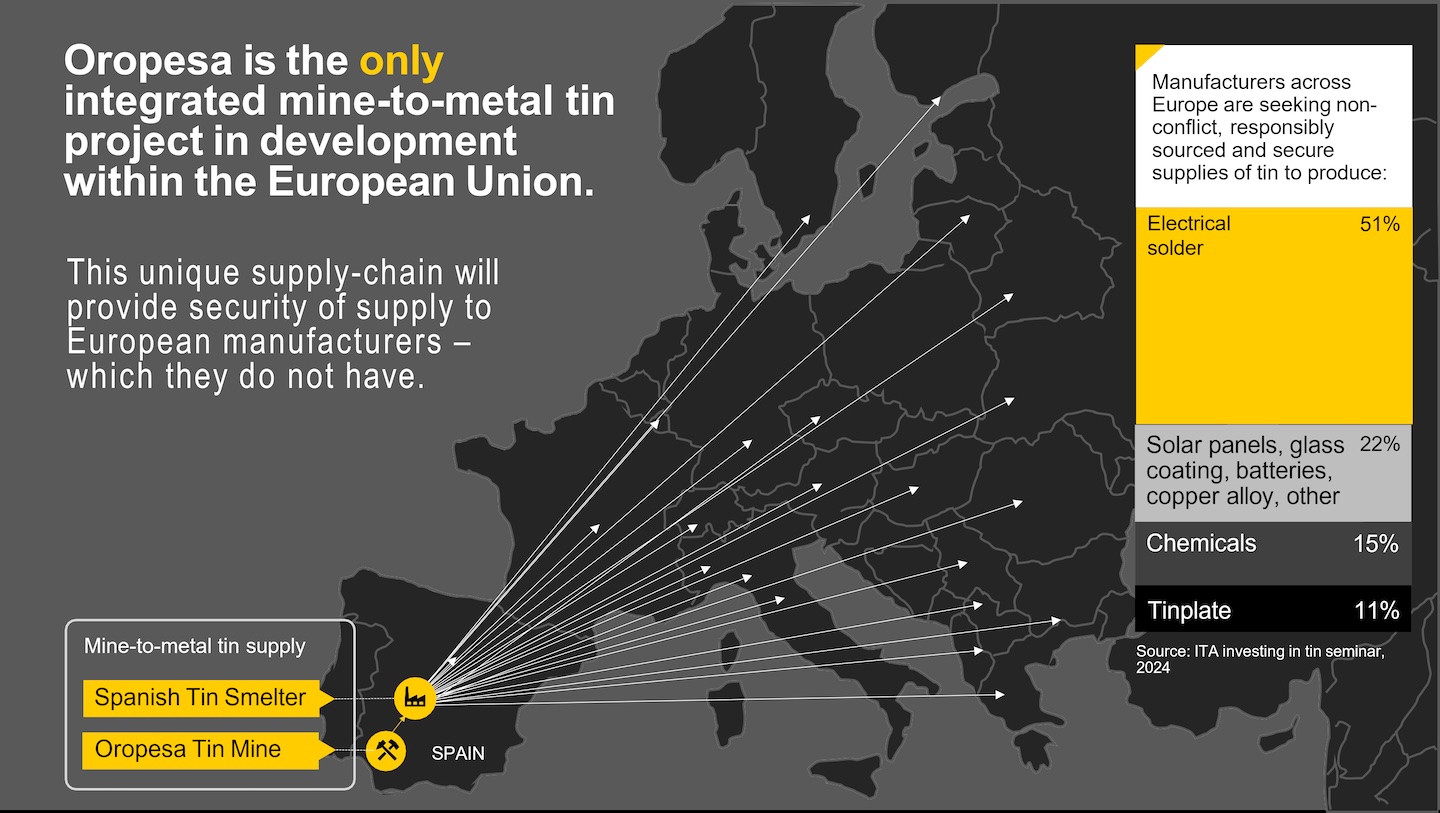
This represents a significant change in the European tin production context:
The Oropesa Project was conceived from its origin with an integral vision of the value chain, going beyond mineral extraction. Its approach is based on integrating the different stages of the process within European territory, ensuring control, traceability and accountability at each phase.
Responsibly produced tin
Responsible mineral extraction
The chain begins with a mining operation designed under criteria of safety, efficiency and impact minimization, based on solid geological knowledge and rigorous planning. Mining activity is carried out in accordance with European regulations, with environmental controls, water management and progressive restoration.
Processing and concentration
The extracted mineral is processed to obtain tin concentrates, using proven and optimized technologies for the deposit’s mineralogy. This phase allows maximizing metal recovery and reducing the volume of material transported.
Smelting and metal production in Europe
Unlike most mining projects, Oropesa integrates the transformation of concentrate into metal within Europe, avoiding shipment of material to third countries. This stage allows producing high-purity tin ingots destined directly for the European market.
Supply to European industry
The produced tin is destined for European manufacturers, closing a short, safe and traceable supply chain, aligned with the needs of the technology, energy and industrial sectors.
This “mine to metal” model reinforces European strategic autonomy, reduces geopolitical risks, decreases emissions associated with transport and ensures that the added value of the resource remains in Europe.
Modern tin production involves designing projects from their origin to minimize impacts, ensure safety and assure territorial integration. In Europe, these principles translate into demanding regulations, administrative control and public transparency.
Producing tin in Europe allows:
The Oropesa Project responds to this approach, committing to European, responsible and traceable tin that reinforces supply security and strategic autonomy of the European Union in critical raw materials.